
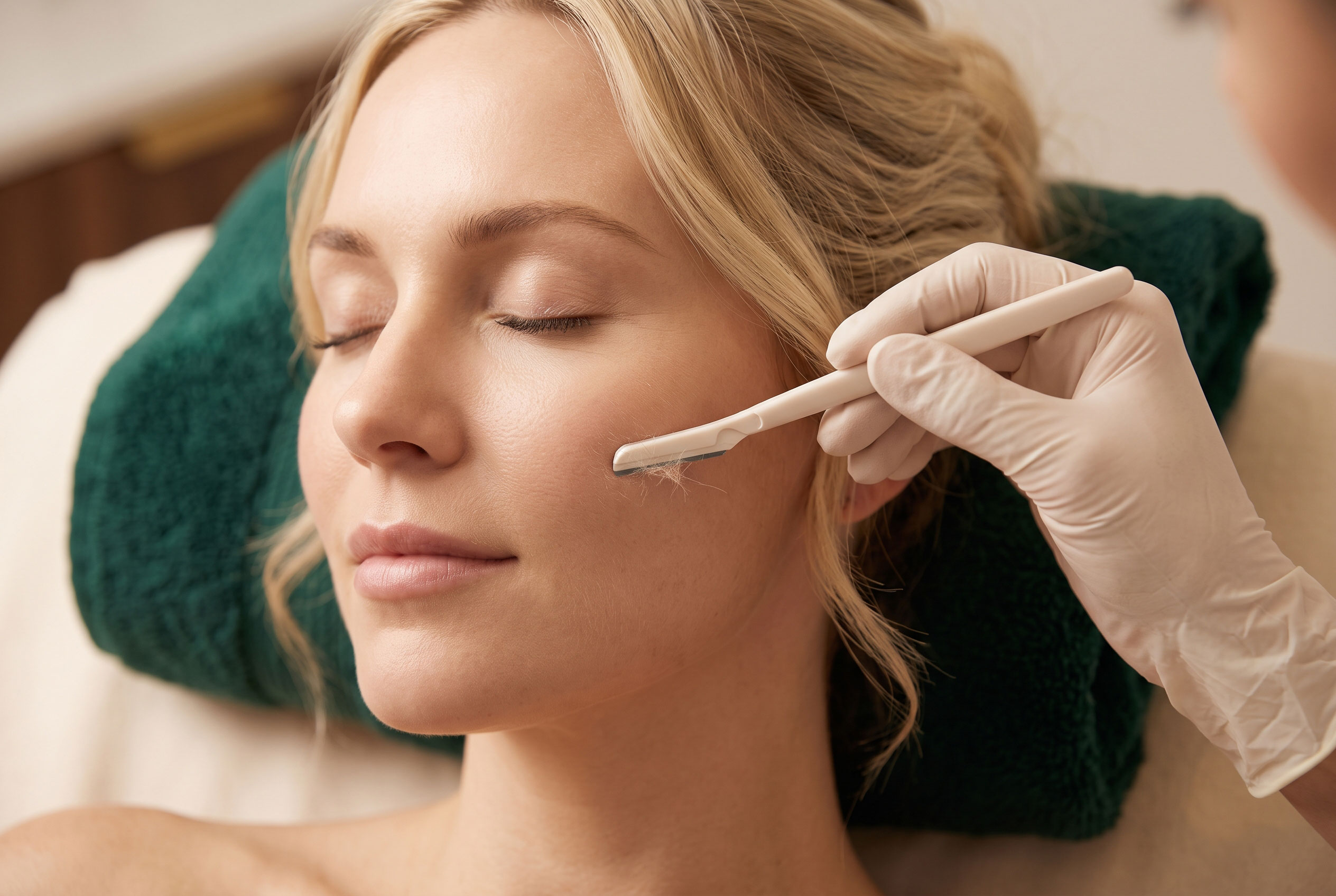
Dermaplaning is a physical exfoliation treatment that uses a sterile surgical blade, held at an angle, to gently remove the outermost layer of dead skin cells along with the fine vellus hair (“peach fuzz”) on the face. The result is instantly smoother, brighter skin and a clean canvas that lets skincare and makeup sit better. It is a quick, low-downtime way to refresh the complexion—and a mechanical alternative to chemical exfoliation.
At a glance
- What it is: Physical exfoliation using a sterile blade to remove dead surface skin and vellus hair
- Benefits: Smoother, brighter skin; better product absorption and makeup application
- The peach-fuzz myth: Vellus hair grows back as before—not thicker or darker
- Downtime: Minimal; some temporary redness or sensitivity
- Who performs it: A trained professional such as an aesthetician or dermatologist
- Not for everyone: Best avoided over active acne and certain skin conditions
What is dermaplaning?
Dermaplaning is a minimally invasive exfoliation treatment in which a trained provider uses a sterile blade to gently shave away the uppermost layer of skin—the build-up of dead cells—together with the soft vellus hairs on the face.[1][2] It is a form of manual, or physical, exfoliation, as opposed to the chemical exfoliation done with acids. The treatment is quick, done in-clinic, and requires no needles or downtime, which is part of its appeal as a “lunchtime” refresh.
The benefits of dermaplaning
By clearing away dull, dead surface cells and fine hair, dermaplaning leaves the skin immediately smoother and brighter and encourages fresh cell turnover.[2] With that barrier of debris removed, serums and moisturisers absorb more effectively and makeup glides on more evenly. Over time and with regular treatment, it can help soften the look of dullness, rough texture and fine lines.[1][2] Many people also simply enjoy the smooth, hair-free finish.
Does dermaplaning make hair grow back thicker?
This is the most common worry, and the reassuring answer is no. Dermaplaning removes fine vellus hair at the surface; that hair regrows gradually as the same fine, soft hair it was before—its removal is temporary and does not change the hair’s thickness or colour.[2] The idea that shaving or dermaplaning makes hair return coarser or darker is a long-standing myth. (Vellus hair is quite different from the coarser terminal hair governed by the hair growth cycle elsewhere on the body.)
Dermaplaning vs chemical exfoliation
Dermaplaning and chemical exfoliation reach the same goal by different means. Dermaplaning removes dead cells mechanically with a blade, while a chemical peel uses acids such as alpha hydroxy acids or beta hydroxy acids to loosen and dissolve them. Neither is inherently better; they simply suit different skin and goals, and dermaplaning has the added benefit of removing vellus hair. The two are often combined—dermaplaning first, so a peel or active can then penetrate more evenly.
What to expect: downtime and aftercare
Dermaplaning has little to no downtime. Skin may look slightly pink or feel sensitive immediately afterward, usually settling within a day or so.[1] Because a fresh layer of skin is exposed, daily broad-spectrum sun protection is especially important in the days following treatment, and it’s sensible to keep the routine gentle. Results are visible right away and build with a regular treatment schedule.
Who should — and shouldn’t — have dermaplaning
For a safe, even result, dermaplaning should be performed by a trained professional using a sterile blade and proper technique.[1][2] It suits most skin types, but it is generally not recommended over active or inflammatory acne, or for conditions such as rosacea, eczema, psoriasis or an active cold sore, where a blade could aggravate the skin.[1][2] A brief consultation determines whether it’s right for you. At Revel, dermaplaning fits within our skin rituals and can be paired with other treatments in a tailored plan.
Related glossary terms
- Chemical Peel
- Alpha Hydroxy Acids
- Beta Hydroxy Acids
- Glycolic Acid
- Salicylic Acid
- Hair Growth Cycle
- Revel Rituals of Renewal: Skin
Clinical & editorial sources
- Cleveland Clinic. Dermaplaning: What It Is, Benefits & Side Effects. clevelandclinic.org
- The Ohio State University Wexner Medical Center. Dermaplaning. wexnermedical.osu.edu
This glossary entry provides general educational information and does not replace an individual clinical assessment or medical advice.
Clinically reviewed by: Leah Zawawi, RPN | Medical Aesthetics & Injectables.
Last reviewed: August 2026.