
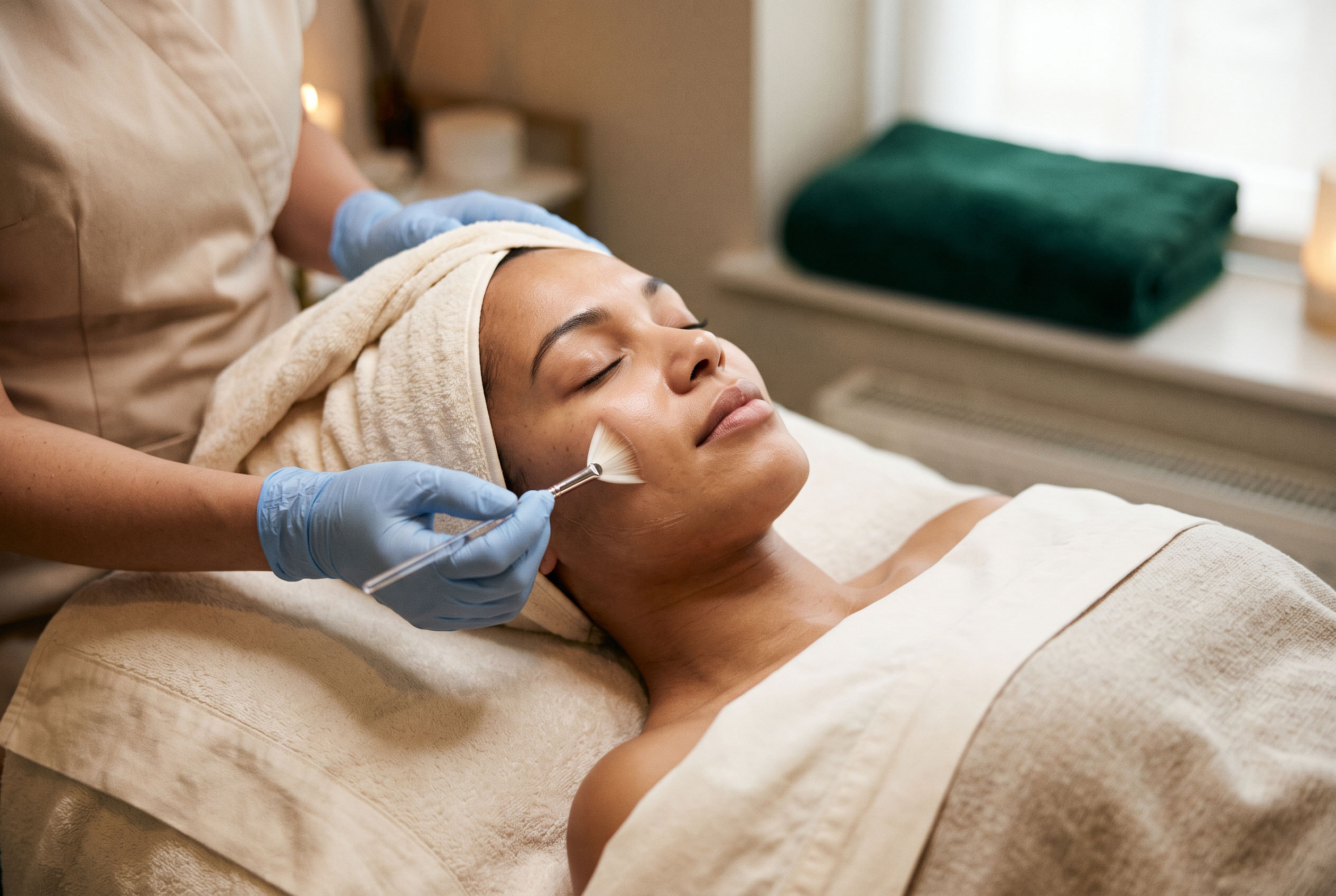
A chemical peel is a skin-resurfacing treatment in which a chemical solution is applied to the skin to remove its outer layers in a controlled way, prompting fresher, smoother skin to grow in their place. Peels range from light, low-downtime refreshers to deeper medical procedures, and the depth is matched to the concern being treated—from dullness and uneven tone to fine lines, acne and sun damage.
At a glance
- What it is: A controlled application of acid (or related agents) that removes outer skin layers to reveal renewed skin
- Three depths: Superficial (epidermis), medium (into the upper dermis) and deep (mid-dermis)
- Common agents: Glycolic and lactic acid (AHAs), salicylic acid (BHA), Jessner’s solution, TCA and phenol
- Treats: Dullness, uneven tone and pigmentation, fine lines, acne and acne scars, sun damage and texture
- Downtime: Minimal for superficial; about 5–7 days for medium; longer for deep
- Key rule: The deeper the peel, the greater the result—and the greater the risk
What is a chemical peel?
A chemical peel uses a carefully chosen solution to injure the skin in a controlled, deliberate way. By removing damaged outer cells, the treatment triggers the skin’s natural repair and renewal, so the skin that replaces them is smoother and more even.[1] How much of the skin is affected—and therefore how dramatic the result and how long the recovery—depends on the peeling agent, its strength and how long it stays on the skin.
The three depths of peel
Peels are grouped by how deeply they reach.[1] Superficial (light) peels act on the epidermis, the outermost layer, for a gentle refresh with little downtime; they are often repeated in a short series.[2] Medium-depth peels reach through the epidermis into the upper dermis and can achieve noticeable resurfacing, often in a single treatment.[2] Deep peels extend into the mid-dermis for the most significant results, but they are true medical procedures with the longest recovery and the highest risk.[1]
Which acids and agents are used
The agent is matched to the target depth. Superficial peels typically use alpha hydroxy acids such as glycolic acid, the beta hydroxy acid salicylic acid, or Jessner’s solution.[2] Medium-depth peels are commonly built from trichloroacetic acid (TCA), sometimes layered after Jessner’s solution or glycolic acid to control the depth.[2] Deep peels use phenol (often with croton oil) or high-concentration TCA.[1] In general, a lower concentration and shorter contact time give a lighter peel, while higher strengths and combinations reach deeper.
What chemical peels treat
Chemical peels are used for a broad range of concerns: photoaging and fine lines, uneven tone and pigmentation (including melasma, where glycolic acid has some of the strongest evidence), acne and acne scarring, sun damage such as actinic keratoses and lentigines, and overall skin texture.[1][2] Lighter peels suit tone, dullness and mild texture; deeper peels are reserved for more pronounced wrinkling, scarring or sun damage. The right choice always depends on the skin concern, skin type and the outcome you’re after.
Downtime and what to expect
Recovery scales with depth. After a superficial peel, downtime is minimal—some mild flaking or shedding over a few days.[2] A medium-depth peel usually involves a brief stinging sensation during treatment and roughly five to seven days of visible peeling as the skin renews.[2] Deep peels require the most recovery and medical oversight. Professional peels are typically performed as part of a tailored plan; you can explore Revel’s skin rituals to see how a peel might fit into a treatment programme.
Safety, skin tone and aftercare
The most common risks are temporary redness, and—more importantly—post-inflammatory hyperpigmentation, which is a particular consideration in deeper Fitzpatrick skin phototypes.[1][2] Careful patient selection, appropriate agent choice and pre-treatment (for example with retinoids) can reduce this risk, and diligent sun protection afterward is essential while the new skin matures.[2] Deeper peels carry greater risks, including scarring, which is why they should be performed by an appropriately trained professional after a proper assessment.[1]
Professional strength and Canadian context
There is a real difference between an at-home product and a professional peel. Under Health Canada’s Cosmetic Ingredient Hotlist, AHAs in consumer cosmetics are limited to 10% or less at a pH of 3.5 or higher; higher-concentration formulations—and the medium and deep peels that rely on them—fall outside consumer limits and belong in a clinical setting.[3] In practice, that means the stronger, more transformative peels should be chosen and performed by a qualified provider who can match the depth to your skin safely.
Related glossary terms
- Alpha Hydroxy Acids
- Beta Hydroxy Acids
- Glycolic Acid
- Salicylic Acid
- Trichloroacetic Acid
- Post-Inflammatory Hyperpigmentation
- Fitzpatrick Skin Phototype
- Revel Rituals of Renewal: Skin
Clinical & editorial sources
- Samargandy S, Raggio BS. Chemical Peels for Skin Resurfacing. StatPearls [Internet]. Treasure Island (FL): StatPearls Publishing; updated 2023 Oct 29. NBK547752
- Millan SH. Superficial & Medium Depth Chemical Peels. Next Steps in Dermatology. 2024. nextstepsinderm.com
- Health Canada. Cosmetic Ingredient Hotlist: Prohibited and Restricted Ingredients. Government of Canada. canada.ca
This glossary entry provides general educational information and does not replace an individual clinical assessment or medical advice.
Clinically reviewed by: Leah Zawawi, RPN | Medical Aesthetics & Injectables.
Last reviewed: August 2026.