
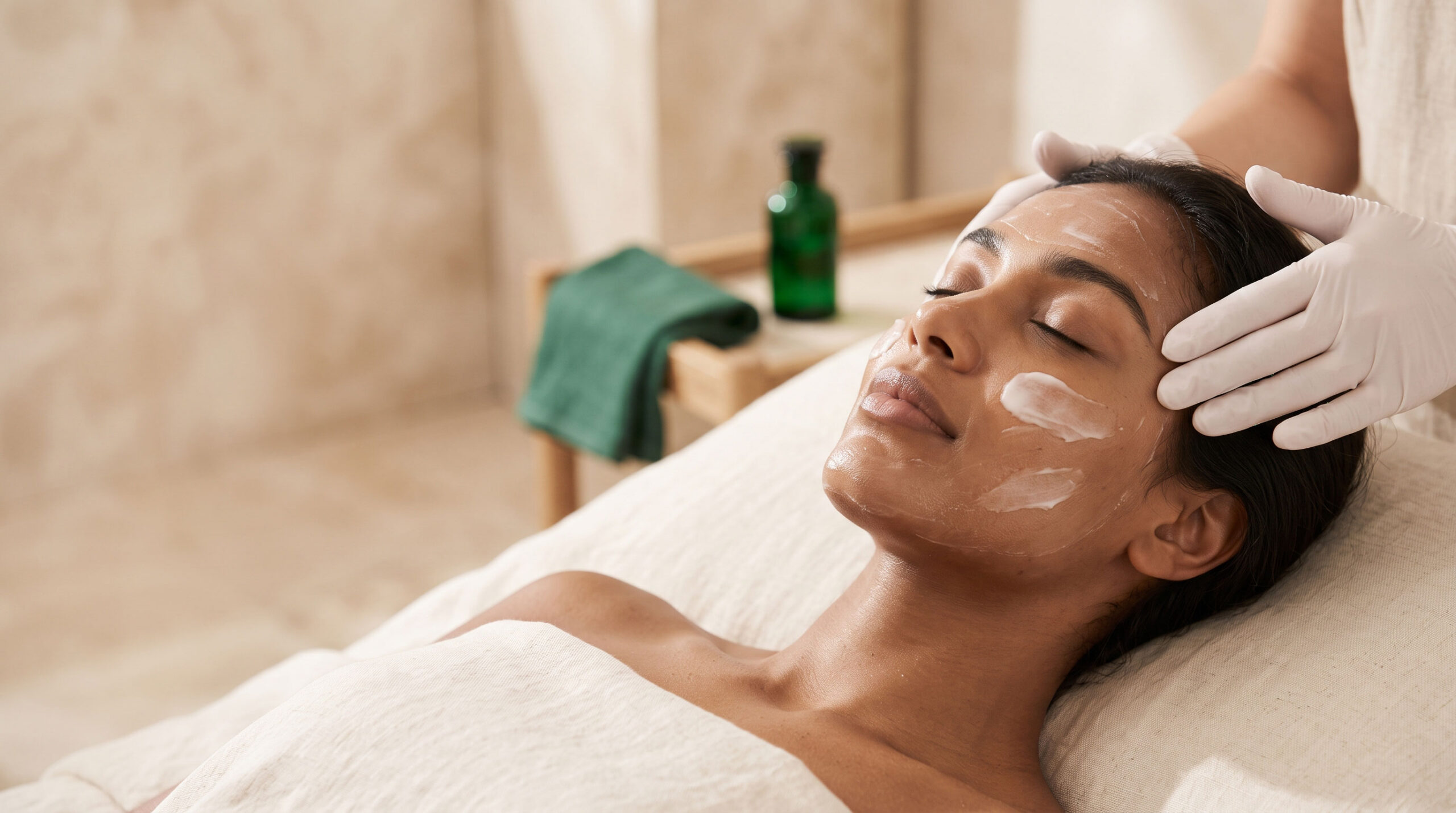
A facial is a professional, non-invasive skincare treatment that cleanses, exfoliates and nourishes the skin of the face. Performed by a trained skincare professional and tailored to your skin type and concerns, a typical facial combines deep cleansing, exfoliation, extractions, a mask and hydration—often with a relaxing massage. It is one of the most familiar treatments in aesthetics, valued both for its skin-health benefits and for the calm, restorative experience.
At a glance
- What it is: A non-invasive, customisable treatment to cleanse, exfoliate, hydrate and refresh facial skin
- Typical steps: Cleanse → exfoliate → (optional steam & extractions) → mask → massage → moisturise and protect
- Who performs it: A licensed skincare professional such as an esthetician
- Common types: Classic facial, hydrating, brightening, acne/deep-cleansing, and device-assisted facials
- How often: Roughly every four to six weeks, in line with the skin’s natural renewal cycle
- Good to know: Best results come from a consistent routine—a single facial is a boost, not a permanent fix
What is a facial?
A facial is a non-invasive skin treatment that includes cleansing, exfoliating, moisturising and other steps customised to your skin type and needs, carried out by a licensed skincare professional.[1] Rather than a single fixed procedure, “facial” is really an umbrella term for a session built from a menu of steps—each one chosen to suit your skin on the day. Facials are considered suitable for virtually any age or skin type and can be adapted to target concerns such as dullness, congestion, dryness or uneven texture.[2] The result is skin that looks clearer and feels refreshed, alongside the relaxation of the treatment itself.
What happens during a facial
Most facials follow a recognisable sequence. It begins with a thorough cleanse to remove make-up, oil and impurities, followed by exfoliation to lift away dead surface cells.[1][2] The skin may then be gently steamed to soften pores before extractions, in which congestion and blackheads are carefully cleared. A treatment mask tailored to your skin follows, then a facial and neck massage to relax the muscles and stimulate circulation, and finally moisturiser and sun protection to seal in the benefits.[1] Along the way, a good professional will assess your skin and suggest a home routine to maintain the results.
Types of facials
Because a facial is so customisable, there are many variations. A classic (sometimes called European) facial covers the core cleanse-exfoliate-mask sequence; hydrating and brightening facials focus on plumping dryness or evening tone; and deep-cleansing or acne facials concentrate on congestion and extractions.[2] Some facials incorporate a light chemical peel using acids such as alpha hydroxy acids or beta hydroxy acids, or pair with dermaplaning for extra smoothing. Device-assisted facials add technology—such as vacuum-based infusion or diamond-tipped exfoliation—to deep-clean and deliver serums.[1][2] The right choice depends on your skin and your goals, which is why an initial assessment matters.
What facials can — and can’t — do
A well-chosen facial can clear pore build-up, improve hydration and brightness, support cell turnover and boost circulation, which encourages healthy collagen activity.[1][2] What a facial won’t do is permanently transform the skin from a single visit or replace medical treatment for conditions like moderate-to-severe acne or significant ageing. Cleveland Clinic offers a sensible rule of thumb: if the marketing sounds too good to be true, proceed with caution.[1] The most reliable gains come from regular facials layered on top of a solid daily routine—with sun protection doing much of the long-term work.
How often should you get a facial?
A common recommendation is a facial roughly every four to six weeks, which aligns with the skin’s natural renewal cycle of about a month.[1] Treating on that rhythm allows each session to build on the last as fresh skin comes to the surface. That said, the ideal interval varies with your skin, your concerns and the type of facial, so a professional can help set a schedule that fits you. It’s also wise to avoid a first-time or more active facial in the days immediately before a major event, in case of temporary redness or breakouts.[1]
Safety and choosing a professional
Facials are low-risk when performed properly, but skill matters—especially with extractions, where over-aggressive squeezing can irritate or scar the skin. Some people also experience temporary “purging,” a short-lived increase in breakouts as accelerated cell turnover brings congestion to the surface.[1] Choose a licensed professional focused on guiding your skin health rather than upselling, and share any conditions, sensitivities or active skin concerns beforehand so the treatment can be adapted safely.[1] At Revel, facials sit within our skin rituals and are tailored to your skin after a proper assessment. This entry is educational and does not replace personalised advice from a qualified professional.
Related glossary terms
- Chemical Peel
- Dermaplaning
- Alpha Hydroxy Acids
- Beta Hydroxy Acids
- Collagen
- Revel Rituals of Renewal: Skin
Clinical & editorial sources
- Cleveland Clinic. Facials: What Are They, and What Do They Really Do? Cleveland Clinic Health Essentials. health.clevelandclinic.org
- U.S. Dermatology Partners. Facial Treatments. usdermatologypartners.com
This glossary entry provides general educational information and does not replace an individual clinical assessment or medical advice.
Clinically reviewed by: Leah Zawawi, RPN | Medical Aesthetics & Injectables.
Last reviewed: August 2026.